
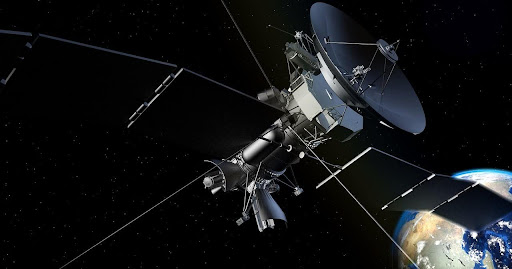
After the stagnation of the COVID-19 pandemic, the current state of the market is improving. The core of demand build various organisations or sole proprietors. They manufacture and sell both the ready satellites and their structural components. Additionally, some space buses are designed or adjusted following the clients’ specifications. To better understand what the satellite bus market means, it’s necessary to clarify what a satellite bus is. Examples of satellite buses you may find here https://dragonflyaerospace.com/satellite-buses/ or here. What is a satellite bus used for? This and other questions are covered there fully and straightforwardly.
What is the Size of the Satellite Bus Market?
The satellite bus market size was estimated at more than $13 billion in 2023. The near-term predictions state that the compound annual growth rate (CAGR) will increase by 7.24% by 2030. The efficient space buses are needed in various fields, such as communication industries, navigation systems, Earth observation, and various scientific research. Such a need, dictated by various fields of science and industries, will increase the investment potential from governments and private entities that are expected to invest in space technologies and space exploration. The market growth is the logical answer to the rising demands in different spheres.
Space Buses Stratification
The current satellite bus market map shows that the variability of spheres is used to motivate the development of buses, which vary by size and application capacities. Hence, the main categories of buses are the following (according to their weight):
- Small satellite buses (<500 kg). These small research buses are used for remote control and sensing and are applied in Low Earth Orbit missions.
- Medium satellite buses (500–2,500 kg). They are used in military and governmental defence programs that are mainly secret.
- Large satellite buses (>2,500 kg). These are used in geological investigations and other larger scientific missions, where land-based technology cannot be involved.
As can be seen, the spheres of satellite bus applications vary depending on the size and composition used in a particular mission. These spheres include but are not limited to communication, weather forecasting, groundwater investigation, environment observation and investigation, surface navigation, and so on.
Current Satellite Buses Trends
Among the popular types of space technologies, it’s necessary to name nanosatellites and microsatellites. Their popularity grows rapidly because they are, and can be applied in a larger number of spheres. The transmission towards smaller buses motivated the developers to decrease the size and weight of the space buses without compromising the product’s quality. As a result, the launch costs are reduced, which allows faster placement of constellations that cover much greater areas of accessible applications. It’s expected that this road to decreasing the satellite’s size will expand the satellite bus market even further in the near future.
Global Players
This market is being developed globally. The annual space market report shows that a leading position is taken by the North American region, including NASA and governmental US defence programs. In the Asia-Pacific region, India and China are actively developing their capabilities and their presence on the market. The European continent is not lagging behind as well. The European Space Agency has launched dozens of projects and missions into space. So, with the great number of players, the question suggests: Who is the world’s largest manufacturer? Today, Lockheed Martin Corporation is one of the most powerful. They have developed hundreds of space platforms via a great number of contracts with NASA, as well as with the private and governmental (military) providers. One of their latest products is the mid-sized space bus ML400, which will be used in Defence Department contracts signed by the company.
What is the Satellite Market Forecast?
The main forecast is the unstoppable development of the demand with the involvement of new players. Manufacturers are now working on new materials for building satellite buses and making them smaller. The rapid development of artificial intelligence has also impacted space engineering by improving autonomous navigation and data processing. Accurate data is extremely important in climate change monitoring missions, for example. Governmental space missions are launching in different spheres, where an observation from space can play a pivotal role. If you are also excited about cosmic exploration and space technologies, do not hesitate to leave your comments and share your views about the future of the satellite bus market.