

If you’ve ever thought about starting your own mobile vending business, selling airtime, electricity, bill payments, or other digital products, one of your first questions is probably: How much money can I make? The truth is, potential profits depend on your sales volume, the products you sell, and the commission rates offered by your service provider.
To make this easier, we’ve created the Flash Machine Income Calculator – a free, simple, and transparent tool that helps you forecast your monthly income based on your expected sales. Whether you’re completely new to Flash or you’ve been running a kiosk for years, this tool will give you a clear picture of your earning potential before you invest time and money.
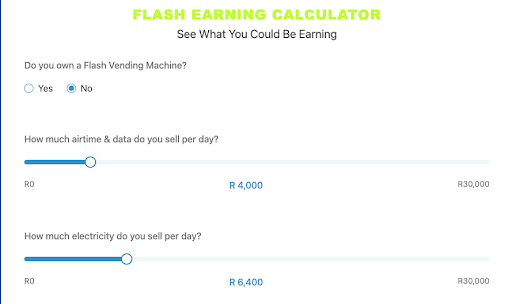
How the Flash Machine Income Calculator Works
The concept is simple:
You input your estimated monthly sales figures across key product categories, and the calculator instantly shows you your potential profit.
You can include:
- Airtime sales (all networks)
- Electricity vending
- Bill Payments (e.g. municipal accounts, DStv, and other services)
- Lotto, Betting, and Other Value-Added Services
Once you’ve entered your numbers, the calculator uses up-to-date commission rates to estimate your monthly earnings. This gives you a realistic idea of what you could make with a Flash machine – no guesswork, no misleading figures.
Why Use the Flash Mobile Vending Income Calculator?
Starting a business always involves some risk, but with the right information, you can minimise surprises and plan for success. Here’s why this tool is so valuable:
- Accurate Forecasting
Know exactly what to expect before you invest in a machine or stock. The calculator is based on current Flash Mobile Vending Machine commission structures, so the results are relevant to today’s market. - Tailored for South African Vendors
Many online tools aren’t designed for our local market. This calculator is built specifically for South African Flash vendors, factoring in our currency, customer behaviour, and regional product demand. - Suitable for Side Hustles or Full-Time Operations
Whether you want to add an extra income stream on weekends or run a full-time kiosk, the tool adapts to your business size. - Easy to Use
No registration, no downloads, no hidden fees – just enter your figures and see your results instantly. - Return on Investment (ROI) Insights
You can compare your projected monthly income to the cost of a Flash device and calculate how quickly you’ll recover your investment.
Example: Potential Monthly Income
Let’s imagine you run a small kiosk in a busy taxi rank. Here’s a realistic breakdown:
- Airtime sales: R15,000 per month
- Electricity sales: R8,000 per month
- Bill payments: R3,000 per month
- Lotto and betting: R1,500 per month
Based on Flash’s current commission rates, your total monthly profit could be in the region of R1,300 – R1,800, depending on exact sales patterns.
This doesn’t even include other potential income streams you could add later, such as prepaid water, bus tickets, or retail gift cards.
Frequently Asked Questions
Q: How much profit do you make selling airtime?
A: It depends on your sales volume. Airtime commissions are usually a small percentage per transaction, but because airtime is a high-volume product, it adds up quickly. The calculator shows you exactly how much you could make based on your inputs.
Q: How much profit do you make selling electricity?
A: Vendors earn a fixed percentage commission on every sale. If you sell large amounts of prepaid electricity, this can be a stable and predictable income source.
Q: How much can you make with a Flash machine?
A: Your earnings depend on the mix of products you sell and your monthly transaction volume. That’s why the calculator is so useful – it turns those variables into clear profit estimates.
Q: Is this based on real Flash commission rates?
A: Yes. The calculator uses the latest available commission rates and is updated regularly to reflect any changes.
Tips to Increase Your Flash Machine Income
If you want to make the most of your Flash device, here are a few proven strategies:
- Location is Everything
Choose a spot with high foot traffic – think transport hubs, shopping centres, or community hotspots. - Offer a Full Range of Services
Don’t just sell airtime – offer electricity, bill payments, Lotto, and any other available services to attract repeat customers. - Promote Your Services
Use posters, flyers, and word-of-mouth to make sure people know what you sell. Small businesses thrive on visibility. - Build a Loyal Customer Base
Offer small incentives for repeat customers, such as quick service or occasional free extras. - Track and Optimise
Keep an eye on which products sell best, and adjust your focus to maximise profits.
Getting Started
Using the Flash Machine Income Calculator is simple:
- Go to the calculator page.
- Enter your estimated monthly sales for each product category.
- Click Calculate to see your profit estimate instantly.
- Compare your projected income with the cost of the Flash machine to see how quickly you can break even.
Ready to Launch Your Flash Vending Business?
Starting a mobile vending business with a Flash device can be a low-risk, high-potential way to earn extra income or build a steady full-time business. With the Flash Machine Income Calculator, you’ll know exactly where you stand before you invest.
Next Steps:
- Compare Flash machine prices and packages.
- Explore starter bundles designed for new vendors.
- Learn sales-boosting tips from experienced operators.
- Use your calculator results to set realistic monthly targets.
Final Thoughts
The Flash Machine Income Calculator isn’t just a tool – it’s a way to plan your business with confidence. By knowing your potential profits in advance, you can make informed decisions, avoid costly mistakes, and hit the ground running.
If you’ve been sitting on the fence about starting a vending business, now is the time to test your numbers, set your goals, and start building your income stream.
Your success starts with one calculation.